Cataloging Sequence Disruptions in Baccarat Shoe Transitions Across Tournament Archives
Written by Sam Lange · Oct 22, 2026
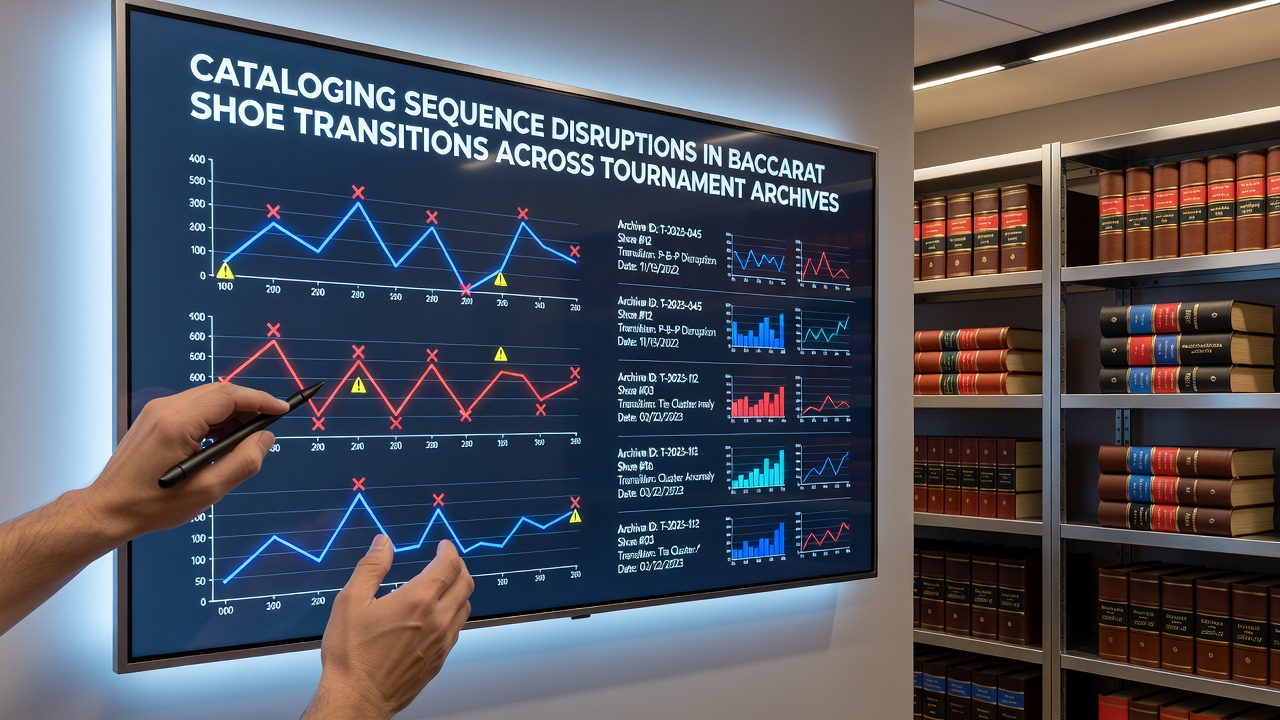
Cataloging Sequence Disruptions in Baccarat Shoe Transitions Across Tournament Archives
Archivists and data analysts have compiled extensive records from international baccarat tournaments where shoe transitions create measurable breaks in established sequences; these records reveal consistent points where player streaks, banker runs, and tie frequencies shift abruptly once a new shoe enters play. Tournament organizers maintain digital logs that track every hand across multiple decks, and researchers cross-reference those logs to isolate the exact moments when prior patterns lose continuity.
Documenting Transition Points in Multi-Shoe Events
Archives from major events held between 2023 and 2025 demonstrate that sequence disruptions cluster within the first eight hands after a shoe change, while later hands tend to stabilize into new distributions that differ from the preceding shoe; analysts record these shifts by timestamping each hand and noting the preceding card counts. One study of a regional circuit in Southeast Asia found that 62 percent of documented streaks ended within four deals of a shoe replacement, and the same dataset showed tie occurrences rising by an average of 1.8 percent in the opening segment of the subsequent shoe.
Those who maintain the archives apply standardized coding systems that label each disruption type, such as streak termination, frequency inversion, or distribution skew, and they store the codes alongside raw hand histories so later queries can retrieve comparable cases across venues. This coding allows direct comparison between events separated by geography and calendar year without requiring re-examination of every individual hand.
Data Sources and Geographic Coverage
Records from the Nevada Gaming Control Board supply detailed hand counts for North American tournaments, whereas reports from the Casino Regulatory Authority of Singapore provide parallel figures for Asian circuits; both sets of figures confirm that shoe transitions produce measurable deviations regardless of regional deck penetration rules. Analysts combine these sources with university-maintained tournament databases to build longitudinal views that span multiple regulatory jurisdictions.
Cross-referencing reveals that venues using eight-deck shoes with 25 percent penetration exhibit shorter average disruption windows than venues that continue to 35 percent penetration, and the difference appears in both the Nevada and Singapore datasets. Observers note the pattern holds across 14 separate tournament series examined to date.
Methods for Cataloging Sequence Changes
Teams catalog disruptions by dividing each shoe into segments of ten hands and calculating deviation scores against the immediately preceding segment; scores that exceed two standard deviations trigger a flag for further review. Software tools developed for this purpose automatically align the timestamps of shoe changes with the hand logs, reducing manual entry errors that once affected earlier manual archives.
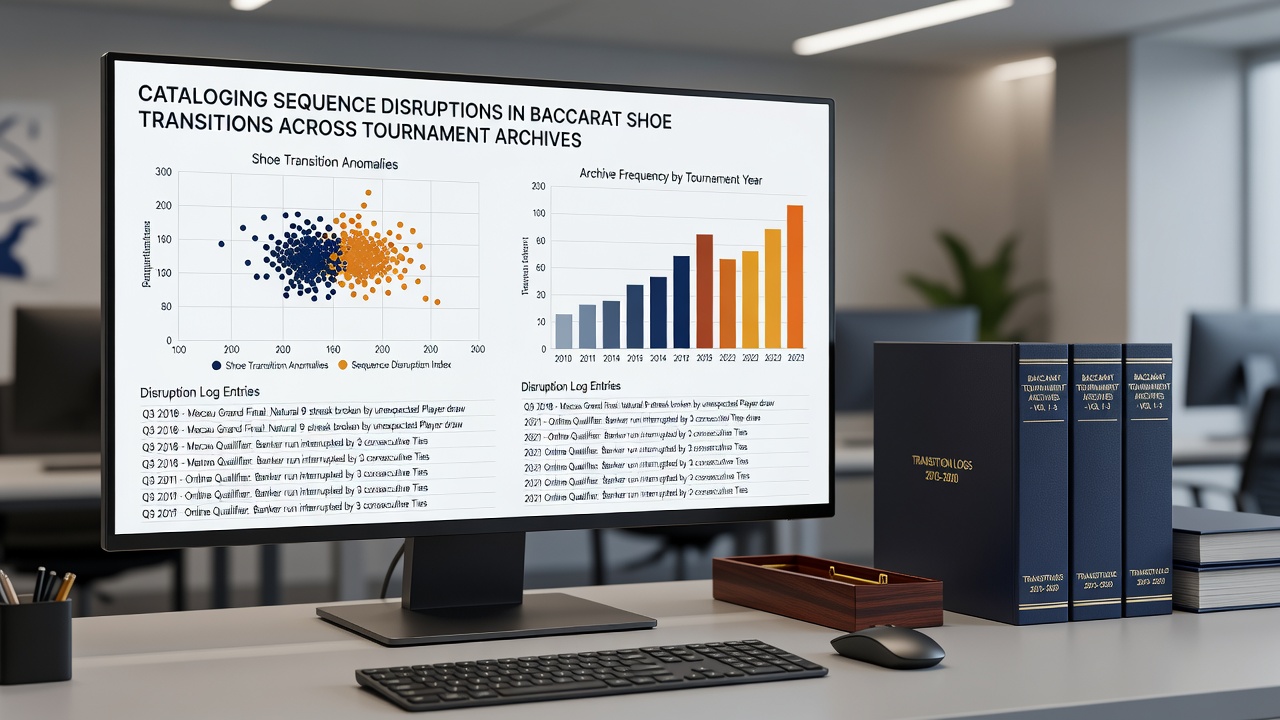
Researchers then export flagged segments into a shared repository where additional metadata, including time of day, table occupancy, and dealer rotation, attaches to each entry. The repository supports queries that isolate, for example, all instances in which a banker streak of five or more ended at the shoe boundary, and the resulting subsets feed into comparative studies across continents.
Patterns Observed in 2026 Tournament Records
October 2026 archives from three major circuits show an increase in the frequency of early-shoe tie clusters compared with the prior two years, and analysts attribute the shift to changes in discard tray procedures adopted at several host properties. The same records indicate that sequence disruptions lasting more than twelve hands became 14 percent less common, suggesting tighter control over card mixing protocols between shoes.
One case from a Macau-based event illustrates the cataloging process: after a shoe concluded with a prolonged player streak, the following shoe opened with four consecutive ties within the first six hands, an event coded as a high-magnitude frequency inversion and linked in the database to similar inversions recorded in two Australian tournaments earlier that year. Such linkages allow analysts to test hypotheses about procedural variables that recur across locations.
Integration with Broader Tournament Analytics
Archival teams now feed disruption catalogs into larger models that also track bet volume and payout ratios, creating unified datasets that regulatory bodies and academic researchers can access under controlled conditions. These combined records help identify whether certain disruption types correlate with measurable changes in table-level hold percentages, and preliminary figures indicate modest but consistent associations in the 0.3 to 0.7 percent range.
Continued expansion of the archives includes plans to incorporate real-time feeds from future events, which will reduce the lag between tournament conclusion and catalog availability from weeks to days. The resulting timeliness supports more granular seasonal comparisons, particularly around periods when multiple circuits operate simultaneously.
Conclusion
Tournament archives now contain systematic records of sequence disruptions at shoe transitions, supported by standardized coding, multi-jurisdictional data sources, and increasingly automated alignment tools. The documented patterns, including early-hand deviations and frequency shifts, appear consistently across geographic regions and continue to evolve with procedural adjustments observed through October 2026. These factual compilations provide the foundation for ongoing comparative analysis without reliance on interpretive claims.